

Every day, you scroll past dozens of headlines about climate catastrophes, miracle solutions, and corporate promises. Some are true. Many aren’t. Learning to tell the difference isn’t just useful, it’s essential for anyone who cares about environmental action.
Media awareness means developing the skills to question, evaluate, and understand the information flooding your screens. It’s about recognizing when a fossil fuel company’s “green” advertisement contradicts their actual practices, or when a viral climate claim lacks scientific backing. For those of us committed to environmental causes, these skills protect us from two equally damaging outcomes: falling for misinformation that wastes our energy on false solutions, or becoming so cynical we disengage entirely.
The stakes are real. A 2023 study found that 64% of people encountered climate misinformation online within a single week. These aren’t harmless mistakes. Deliberate disinformation campaigns have delayed climate policy for decades, costing us precious time we can’t recover.
But here’s the empowering truth: you can train yourself to spot manipulated content, identify credible sources, and share accurate information with others. Media awareness isn’t about becoming paranoid or distrusting everything you see. It’s about building confidence in your ability to navigate information critically, so you can focus your passion and energy on climate solutions that actually work. The right information, properly evaluated, becomes a powerful tool for change.
What Media Awareness Really Means in the Digital Age
Media awareness means more than casually scrolling through your feed and absorbing whatever appears. It’s the practiced skill of questioning what you see, who created it, and why it’s being shown to you. This means understanding that every piece of content you encounter has been filtered through layers of human and algorithmic decision-making before reaching your screen.
For environmental content specifically, media awareness requires recognizing that climate information exists in a crowded ecosystem where science, advocacy, corporate messaging, and deliberate misinformation all compete for attention. Research shows that false news spreads faster than accurate information on social platforms, making critical evaluation skills essential rather than optional.
- Source Credibility
- The reliability and expertise of whoever created or published the content. Check whether sources have transparent authorship, verifiable credentials, and accountability mechanisms.
- Algorithmic Bias
- The way platform algorithms prioritize content based on engagement rather than accuracy, often amplifying sensational or divisive posts about climate issues.
- Confirmation Bias
- Our tendency to seek out and believe information that aligns with existing views while dismissing contradictory evidence, even when that evidence is scientifically sound.
- Information Verification
- The process of checking claims against multiple credible sources before accepting or sharing them, particularly for statistics or urgent environmental warnings.
Understanding these concepts transforms how you interact with environmental content online. Instead of passively accepting a viral post about ocean plastic or a company’s green campaign, you’ll ask deeper questions. Where did these numbers come from? What’s the original research? Who benefits from this narrative?
This critical lens doesn’t mean becoming cynical about everything you see. It means developing discernment so you can confidently identify trustworthy information and act on it. You become someone who not only recognizes credible climate science but also helps others find it, breaking the cycle of misinformation that often paralyzes meaningful action.

Why Media Awareness Matters for Environmental Action
Media awareness isn’t just a nice-to-have skill. It’s essential for effective climate action. Without the ability to evaluate what we see and hear, we become vulnerable to misinformation that can derail both personal choices and collective progress.
Consider what happened in Australia during the 2019-2020 bushfires. Despite overwhelming scientific consensus linking the fires to climate change, coordinated misinformation campaigns on social media successfully convinced portions of the public that arson was the primary cause. This narrative spread rapidly, diverting attention from the climate crisis and weakening public support for emissions reduction policies. The result? Delayed action at a critical moment.
The consequences ripple outward. When climate misinformation impacts policy decisions, entire communities suffer. False claims about renewable energy costs have stalled clean energy projects. Greenwashing by major corporations has allowed business-as-usual practices to continue under a veneer of environmental responsibility. Individuals who want to make a difference find themselves paralyzed by conflicting information, unsure which actions truly matter.
Media awareness changes this dynamic. A community in Oregon learned this firsthand when residents began questioning suspiciously timed social media posts claiming that environmental activists had started local wildfires. By fact-checking sources and identifying coordinated bot activity, they prevented the narrative from taking hold. Their local government moved forward with climate adaptation measures without facing manufactured opposition.
The stakes are real. Every day without strong climate action increases future costs and risks. When we develop media awareness, we protect ourselves from manipulation. We can identify credible science, recognize corporate greenwashing, and separate genuine environmental solutions from empty promises. This clarity translates directly into more effective advocacy, smarter personal choices, and stronger community movements. You become part of the solution rather than an unwitting obstacle to progress.
Social Media’s Double-Edged Sword for Environmental Awareness
When Social Media Gets It Right
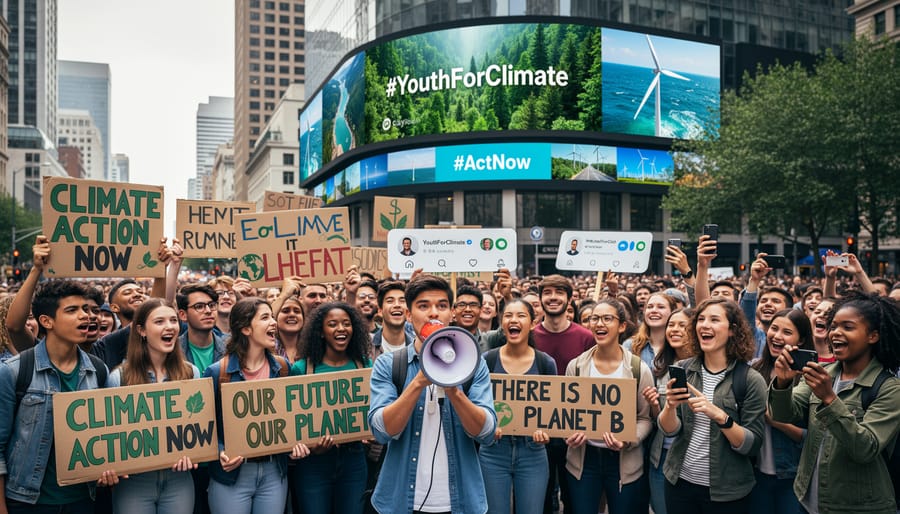
Social media has proven itself a powerful tool for climate action, especially in the hands of determined young people. The Fridays for Future movement, sparked by Greta Thunberg’s solitary school strike, spread across continents through Instagram posts, Twitter threads, and viral videos. Millions of students joined climate strikes because they saw their peers taking action online and felt inspired to do the same.
Success stories emerge regularly. The #TrashTag challenge turned cleanup efforts into a social media trend, with participants posting before-and-after photos of spaces they’d cleaned. Simple? Yes. But it resulted in thousands of beaches, parks, and neighborhoods being cleared of waste by people who might never have acted otherwise.
Community-led campaigns demonstrate how digital platforms amplify local voices. Indigenous activists use social media to protect their lands, sharing real-time updates about environmental threats and mobilizing global support. Youth organizers in the Philippines built online communities that evolved into beach cleanup groups meeting every weekend.
These examples share common threads: authentic storytelling, clear calls to action, and people showing up. They remind us that developing media awareness isn’t just about spotting misinformation. It’s also about recognizing and supporting genuine movements that translate digital engagement into tangible environmental progress. The right message, shared thoughtfully, can spark something real.
The Hidden Traps in Your Feed
Your feed is working against you more than you realize. Companies pour millions into greenwashing campaigns that dress up business as usual in green packaging. A plastic bottle made from 10% recycled material becomes “eco-friendly.” A fast fashion brand launches a tiny sustainable collection while producing thousands of polluting items behind the scenes.
Sponsored content blurs the line between journalism and advertising. That article about “clean coal” or “sustainable aviation fuel” might be paid promotion disguised as objective reporting. Without clear labeling, you’re absorbing corporate messaging without knowing it.
Then there are algorithm-driven echo chambers that show you only what you already believe. Platforms prioritize engagement over accuracy, feeding you content that confirms your worldview while hiding perspectives that might challenge or expand it. You think you’re informed, but you’re actually becoming more isolated.
Perhaps most dangerous is the emotional manipulation. Doom-scroll content triggers anxiety without offering pathways to action. You see catastrophic headlines, feel overwhelmed, and freeze. This paralysis serves no one except those who benefit from your inaction.
Recognizing these traps is your first defense. Once you spot them, you can actively seek diverse sources, verify claims, and focus on information that empowers rather than paralyzes you.
Building Your Media Awareness Toolkit

Questions to Ask Before You Share
Before you hit that share button, pause for a moment. Developing strong media awareness means building the habit of questioning content, not accepting it at face value. Here’s a quick framework to guide your thinking.
First, check the source. Who created this content, and what’s their expertise? A climate scientist’s research carries different weight than an anonymous social media account. Look for credentials, affiliations, and track records.
Next, examine the evidence. Does the post cite specific studies, data, or verifiable facts? Vague claims like “experts say” or “studies show” without links or references should raise red flags. Real environmental reporting provides receipts.
Consider the emotional appeal. Does the content make you angry, scared, or outraged without offering context or solutions? While climate change deserves serious concern, manipulative content often exploits emotions to go viral rather than inform.
Ask yourself why this was shared with you. What’s the goal? Genuine environmental content aims to educate and empower action. Misinformation or greenwashing often seeks clicks, sales, or political division.
Finally, verify before amplifying. A quick search can reveal whether other credible sources confirm the information. Taking thirty seconds to fact-check protects your network from spreading falsehoods and strengthens collective media awareness.
Red Flags That Signal Unreliable Content
Developing strong media awareness means recognizing the telltale signs that content may be unreliable or deliberately misleading. Start by checking for sources. Credible articles cite research, name experts, and link to verifiable information. If a climate story makes bold claims without any attribution, that’s your first red flag.
Watch for extreme language designed to trigger emotional reactions rather than inform. Words like “catastrophic,” “miracle solution,” or “total hoax” suggest the content prioritizes clicks over accuracy. Real environmental journalism presents complexity and nuance. Climate change involves trade-offs, scientific uncertainty in specific predictions, and varied solutions across different contexts. Content that paints everything as simple or absolute is probably oversimplifying.
Pay attention to engagement bait. Does the post seem designed purely to generate shares, outrage, or feel-good reactions? Social media algorithms reward emotional content, so some creators prioritize virality over truth. Quality environmental information educates you about problems and pathways forward, not just how to feel.
Check the source’s track record and transparency. Who’s behind the content? What’s their expertise? Are they open about funding sources? These questions help you distinguish genuine environmental advocacy from greenwashing or agenda-driven misinformation. Building this awareness protects you from manipulation and strengthens your ability to contribute meaningfully to climate solutions.
Where to Find Trustworthy Environmental Information
Navigating the sea of climate information becomes easier when you know where to look. Start with scientific institutions like NASA’s Climate Change portal and NOAA, which translate complex research into digestible formats without dumbing down the science. These organizations publish data-driven content that helps you understand what’s actually happening to our planet.
For deeper dives, Google Scholar and websites like The Conversation offer peer-reviewed research written for general audiences. You don’t need a PhD to grasp these articles because scientists increasingly recognize the importance of clear communication.
Established environmental organizations such as the Environmental Defense Fund, World Wildlife Fund, and the Union of Concerned Scientists maintain rigorous fact-checking standards. They combine scientific accuracy with compelling stories of solutions in action.
Try this: bookmark three trusted sources and commit to checking them weekly. You’ll develop media awareness by recognizing patterns in how credible sources present information compared to sensationalized content. Building this habit transforms you from a passive consumer into an informed advocate who can spot misinformation and share accurate climate news with your community.
Turning Media Awareness Into Climate Action
Understanding how to evaluate information is only the beginning. Real change happens when you transform that knowledge into purposeful action. Media awareness gives you the tools to cut through the noise and focus your energy where it counts most.
Start by choosing your sources carefully. Follow climate journalists, scientists, and organizations with track records of accurate reporting. When you see claims about environmental solutions or corporate commitments, use the evaluation skills you’ve developed to verify them before sharing. This simple act stops misinformation in its tracks and amplifies credible voices instead.
Your media consumption habits shape more than your own understanding. They influence your network too. Share well-researched articles with context explaining why the information matters. Comment on posts that spread myths with polite corrections and reliable sources. You’re not being confrontational; you’re creating space for informed conversations that lead somewhere productive.
This mindset shift helps you avoid burnout from doom-scrolling while staying engaged with genuine progress.
Take it further by creating content yourself. Document local environmental initiatives. Interview community leaders working on climate solutions. Film short videos explaining complex topics in accessible ways. You don’t need a massive following to make an impact. Authentic stories from real people often resonate more powerfully than polished campaigns.
Connect with others who share your commitment to media literacy. Join online groups that fact-check environmental claims together. Attend workshops on digital activism. The collective power of informed communities pushes back against misinformation while building momentum for real solutions. Every person you help develop critical thinking skills multiplies your impact exponentially.
Media awareness isn’t about becoming cynical or distrusting every headline that crosses your screen. It’s about transforming yourself into an empowered, discerning consumer who can separate the signal from the noise. Think of it as developing a new skill, like learning to read, but for the digital age. The more you practice questioning sources, checking credentials, and tracing information back to its origin, the sharper these abilities become.
Start today. The next time you see a striking climate claim on social media, pause for just thirty seconds to verify it before sharing. Ask your friends and family to do the same. These small actions create ripples that extend far beyond your immediate circle.
Here’s the real power of media awareness: you get to choose which voices to amplify. By recognizing credible environmental journalism and authentic scientific communication, you become part of a solution. You help drown out the misinformation. You support the researchers, journalists, and activists doing vital work. You transform from a passive scroll into an active force for change.
Your ability to think critically about media doesn’t just protect you from false information. It strengthens the entire environmental movement. Every credible source you share, every misleading post you don’t, contributes to a more informed public ready to tackle the climate crisis. That’s a superpower worth developing.