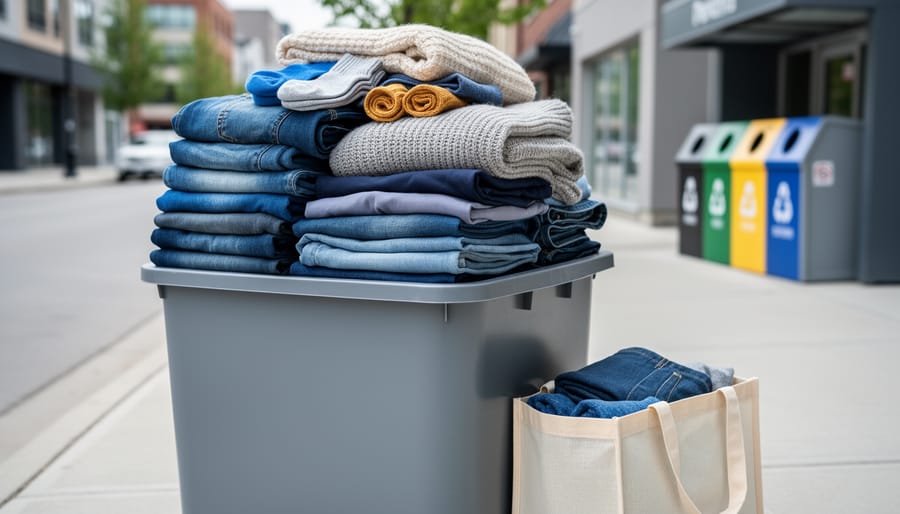
Folded clothes placed in a textile donation drop-off bin with a reusable tote nearby in a Canadian collection area.

How to Recycle Clothing in Canada: A Step-by-Step Guide to Textile Waste Reduction

Textile recycling in Canada just got easier through m recycle programs, specialized collection systems designed to divert clothing and fabrics from landfills by channeling them into reuse and recycling networks. These programs typically involve dropping off unwanted textiles at designated bins, partnering retailers, or municipal collection events where items are sorted, cleaned, and either redistributed for second-hand use or broken down into raw materials for new products. Anyone can participate, no special preparation required beyond ensuring items are clean and dry.
Canadians discard roughly 12 kilograms of clothing per person …
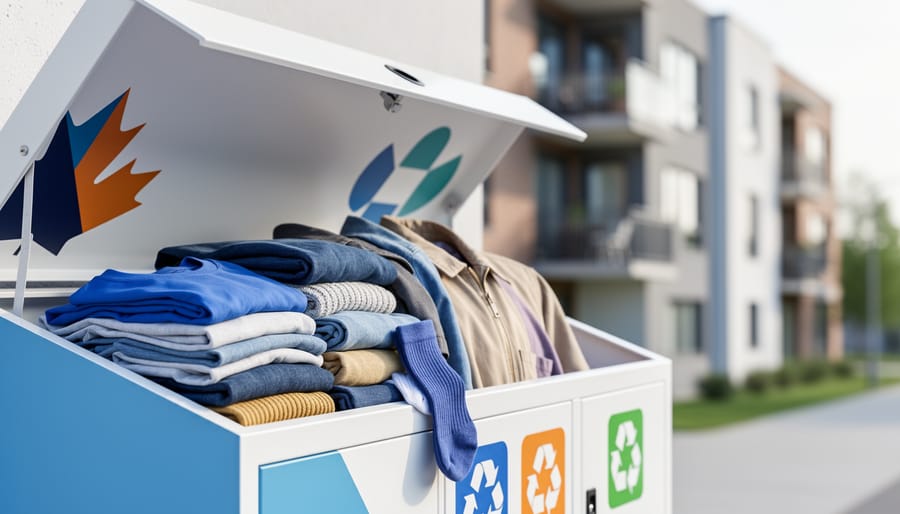

Overfilled textile recycling drop-off bin with assorted clothing, photographed in a clean outdoor Canadian setting under soft daylight.

Clothing Recycling Programs That Actually Keep Textiles Out of Canadian Landfills

Clothing recycling programs turn unwanted textiles into new materials or products, diverting millions of pounds of fabric from landfills each year. Unlike donation centers that accept only wearable items, these programs take damaged, stained, or worn-out clothing that would otherwise be thrown away, processing them through mechanical shredding or chemical breakdown to create insulation, industrial rags, or even new fibers.
The need has never been more urgent. The average North American discards approximately 81 pounds of textiles annually, and less than 15% currently gets recycled. Most donated clothing doesn’t actually get …

Young adult wearing glasses looking at a smartphone, with reflections showing smokestacks on one lens and wind turbines on the other; softly lit home workspace blurred in the background, no readable text.

Media Awareness: Your First Defense Against Misinformation and Echo Chambers

Every day, you scroll past dozens of headlines about climate catastrophes, miracle solutions, and corporate promises. Some are true. Many aren’t. Learning to tell the difference isn’t just useful, it’s essential for anyone who cares about environmental action.
Media awareness means developing the skills to question, evaluate, and understand the information flooding your screens. It’s about recognizing when a fossil fuel company’s “green” advertisement contradicts their actual practices, or when a viral climate claim lacks scientific backing. For those of us committed to environmental causes…

a giant solar panel set on a commercial building roof

Ontario Solar Incentives

In recent years, Ontario has emerged as a leading force in adopting renewable energy, particularly solar power. The province’s commitment to reducing greenhouse gas emissions and promoting sustainable development has resulted in numerous incentives, like the ones outlined by CanBio.ca, and programs encouraging homeowners, businesses, and communities to embrace solar energy solutions.
In this article, we will delve into Ontario solar incentives, exploring the various programs, their benefits, and their impact on the province’s solar energy system landscape….

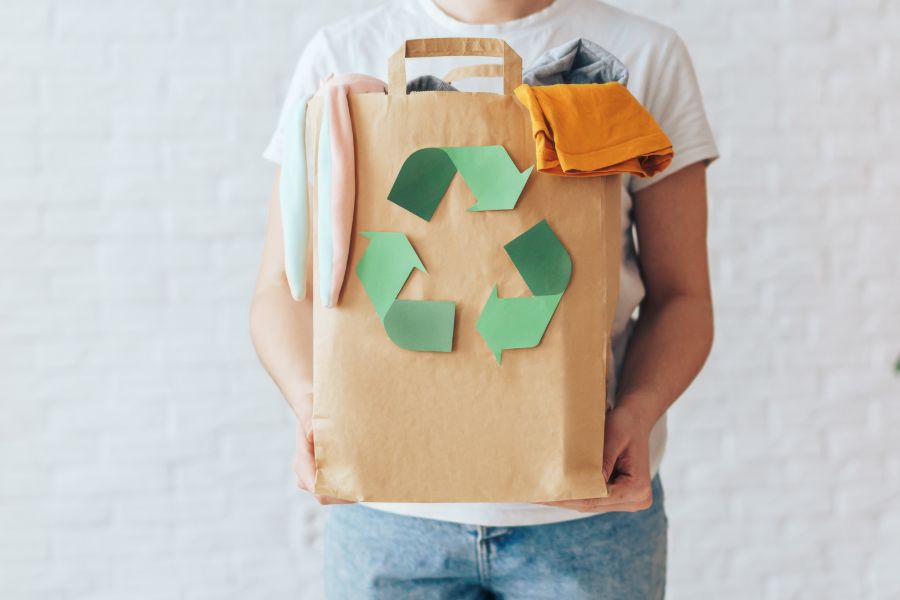
Girl holding paper bag with old clothes for recycling

How and Where to Do Old Clothes Recycling in Canada

When coffee stains your favorite sweatshirt permanently– the first thing that comes to mind is the garbage. But have you ever wondered what happens to clothes when you get rid of them?
Of course, they don’t just disappear. Old clothing ends up in landfills for years and years, creating a massive amount of waste. But do you know there are ways to reuse and recycle that clothing instead?
In addition to supporting sustainable clothing brands, old clothes recycling is an essential …

9 Ways to Keep the Environment Clean

The environment is the leading cause of the world’s problems. We are currently experiencing global warming, pollution, and an extinction rate that has never been documented before.
We all care about the environment and want to do our part in helping it, but we often don’t know where to start. What can you do to help?
As simple as it may sound, it has a huge impact on society. If you care about the environment, keep reading!
1. Use reusable bags
Use reusable bags for groceries. Instead of taking …

Health Risks of Vaping

The Environmental Impacts and Health Risks of Vaping

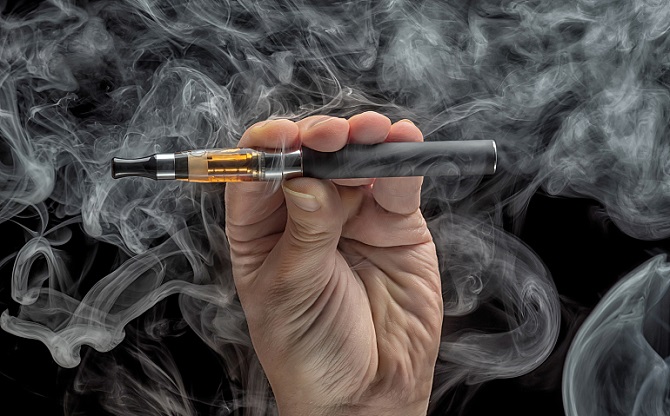
E-cigarettes and vaping have been long marketed by Industry leaders as safer alternatives to cigarettes and other conventional tobacco products. The modern and compact forms of vaping and e-cigarette devices have made their sales skyrocket, especially among young people.
Nevertheless, there have been reports on deaths and hospitalizations caused by vaping activities. Still, apart from the health risks, many experts have warned us about the environmental impact of it.
Environmental impacts of vaping and e-cigarettes
Vaping devices use single-use plastic components in their …

A Thanksgiving: Plastic Edition

Commemorating Thanksgiving meant having the entire family coming together, sharing fun stories, and eating lots of food — but with a side of plasticity. And by ‘plasticity’, we are talking about discarded plastics that had nothing to do with Thanksgiving all together.
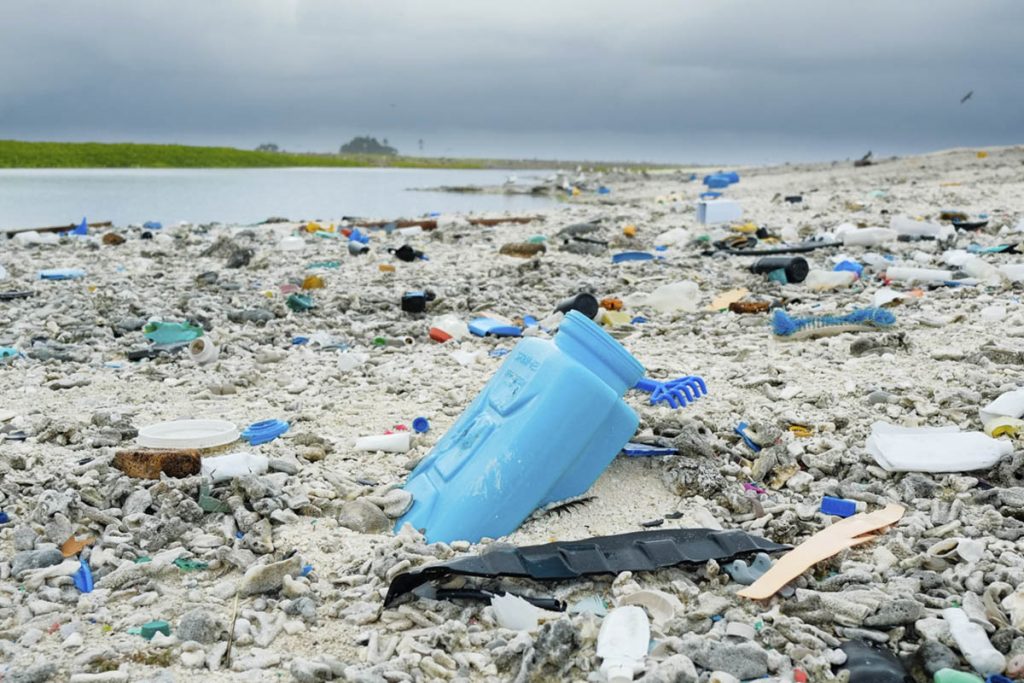
Single-use plastics, cellophane bags, plastic bottles, and tiny packet-packaging can significantly affect the amount of trash being piled over landfills and places like the Great Pacific Garbage patch. And take note, this doesn’t even lessen the number of garbage expended during holidays every year. Statistically, Americans throw away 25% more trash during …

Wolves Facing Extinction

Wolves have been having a bad rep lately, thanks to illegal poachers raiding their habitats and killing them as prey. This is because wolves were not being protected by most states as a species altogether. Most people deem them to be dangerous beasts of the wild and poachers are more than happy to kill them like a game.
According to National Geographic, the Gray Wolf species had almost been extinct 48 years ago. Luckily, experts stepped in and laid out their research and insisted on the protection and preservation of the animal that they are now taken out of the endangered list of extinct species. However, the rest of the other wolf…

Why Whole Foods Go Plastic-Free?

We see them all around us: shiny vegetables individually wrapped in air-tight cellophane, single-serving meals in Styrofoam or plastic cups, and smaller bottles upon bottles of drinking water. Plastic packaging has taken over more than half of our grocery lists which was hard to keep up with our carbon footprint.
Plastic pollution is one of the top problems the world is facing today. Single-use plastics and Whole Foods are among some of the industry’s top users of plastics that even their motto of “Planet over Profits” seems more of a marketing strategy jingle instead of a promise.
Just recently, microplastics were …