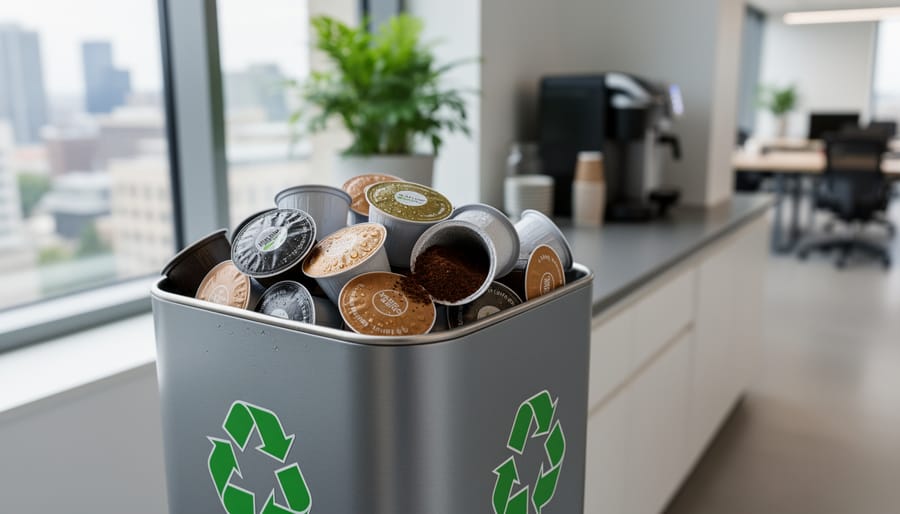
Used Keurig K-Cup pods in a recycling bin next to an office coffee station in a Canadian workplace setting.

What Is the K-Cycle Recycling Program (and How Does It Work)?

K-Cycle is a workplace recycling service that collects used Keurig K-Cup pods and transforms them into compost and recycled materials, keeping single-serve coffee waste out of landfills. Since its inception, the program has diverted over 7.8 million pounds of pod material from disposal sites, with Canadian businesses alone preventing more than 1.4 million pounds from reaching landfills since 2019.
The initiative matters because K-Cup pods, despite their convenience, create significant waste challenges when tossed in regular trash. These multi-material pods contain plastic, aluminum, organic coffee grounds, and paper filters that don…

Overfilled textile recycling drop-off bin with assorted clothing, photographed in a clean outdoor Canadian setting under soft daylight.

Clothing Recycling Programs That Actually Keep Textiles Out of Canadian Landfills

Clothing recycling programs turn unwanted textiles into new materials or products, diverting millions of pounds of fabric from landfills each year. Unlike donation centers that accept only wearable items, these programs take damaged, stained, or worn-out clothing that would otherwise be thrown away, processing them through mechanical shredding or chemical breakdown to create insulation, industrial rags, or even new fibers.
The need has never been more urgent. The average North American discards approximately 81 pounds of textiles annually, and less than 15% currently gets recycled. Most donated clothing doesn’t actually get …

Young adult wearing glasses looking at a smartphone, with reflections showing smokestacks on one lens and wind turbines on the other; softly lit home workspace blurred in the background, no readable text.

Media Awareness: Your First Defense Against Misinformation and Echo Chambers

Every day, you scroll past dozens of headlines about climate catastrophes, miracle solutions, and corporate promises. Some are true. Many aren’t. Learning to tell the difference isn’t just useful, it’s essential for anyone who cares about environmental action.
Media awareness means developing the skills to question, evaluate, and understand the information flooding your screens. It’s about recognizing when a fossil fuel company’s “green” advertisement contradicts their actual practices, or when a viral climate claim lacks scientific backing. For those of us committed to environmental causes…