
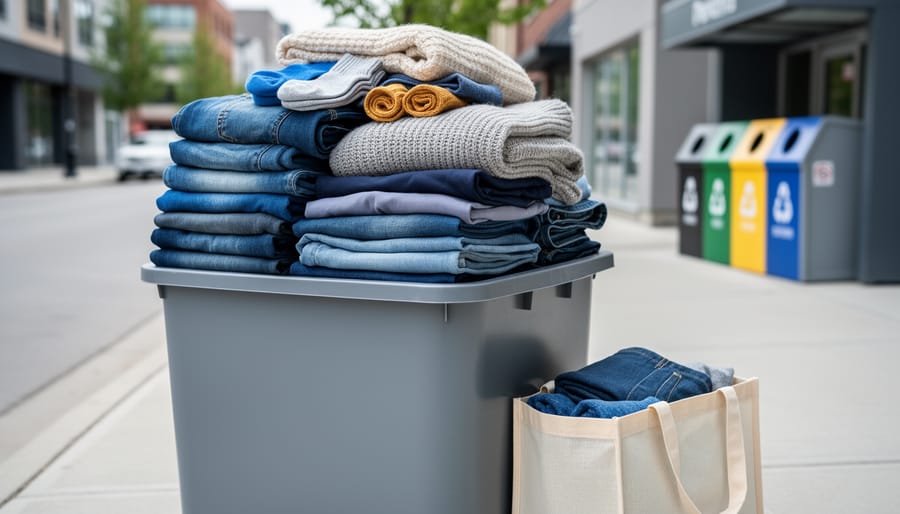
Textile recycling in Canada just got easier through m recycle programs, specialized collection systems designed to divert clothing and fabrics from landfills by channeling them into reuse and recycling networks. These programs typically involve dropping off unwanted textiles at designated bins, partnering retailers, or municipal collection events where items are sorted, cleaned, and either redistributed for second-hand use or broken down into raw materials for new products. Anyone can participate, no special preparation required beyond ensuring items are clean and dry.
Canadians discard roughly 12 kilograms of clothing per person each year, and less than 15% of these textiles currently get recycled. That gap represents both an environmental challenge and an opportunity. When textiles decompose in landfills, they release methane, a greenhouse gas far more potent than carbon dioxide. Recycling textiles through m recycle programs stops that cycle while conserving the water, energy, and raw materials needed to produce new fabric.
The process works because these programs have built infrastructure to handle items traditional recycling streams can’t accept. Torn jeans, mismatched socks, stained shirts, items your local thrift store might reject all have value in the textile recycling ecosystem. They can become insulation, cleaning rags, or fiber for new garments.
This guide walks you through every step of participating in m recycle programs across Canada. You’ll learn how to prepare your textiles, locate the nearest drop-off points, understand what happens after you donate, and verify your contribution made a real difference. Small actions multiply when communities engage together.
Understanding Textile Recycling in Canada
Clothing recycling in Canada transforms unwanted garments into new materials or products rather than sending them to landfills. When you recycle textiles, they typically follow one of three paths: donation for reuse, downcycling into industrial rags or insulation, or fiber-to-fiber recycling that creates new fabrics. The process begins with collection, where items are sorted by material composition and condition, then processed through mechanical or chemical recycling methods that break down fibers for remanufacture.
The term “m recycle” refers to municipal recycling programs across Canadian provinces that have expanded beyond traditional materials like paper and plastic to include textiles. These community-based initiatives partner with local governments to establish convenient drop-off points, often at existing recycling depots or community centers. Some municipalities integrate textile collection into curbside programs, while others operate seasonal collection events or permanent bins in high-traffic areas.
Most natural-fiber textiles qualify for recycling, including cotton, wool, linen, silk, and blended fabrics. Synthetic materials like polyester, nylon, and acrylic are also recyclable, though they require different processing methods. You can recycle everyday items such as jeans, t-shirts, sweaters, bed linens, towels, curtains, and even worn-out socks. Shoes, handbags, and accessories with mixed materials present more challenges but many programs accept them for specialized processing.
The current landscape of textiles in Canadian landfills reveals significant environmental concerns, with the average Canadian purchasing 27 kilograms of new clothing each year while discarding similar amounts. M recycle programs aim to keep textiles out of waste streams by making recycling as accessible as throwing items away. Provincial differences exist in program availability and accepted materials, but the overarching goal remains consistent: creating circular systems where clothing maintains value beyond its first use.
What You Need to Recycle Clothing Successfully
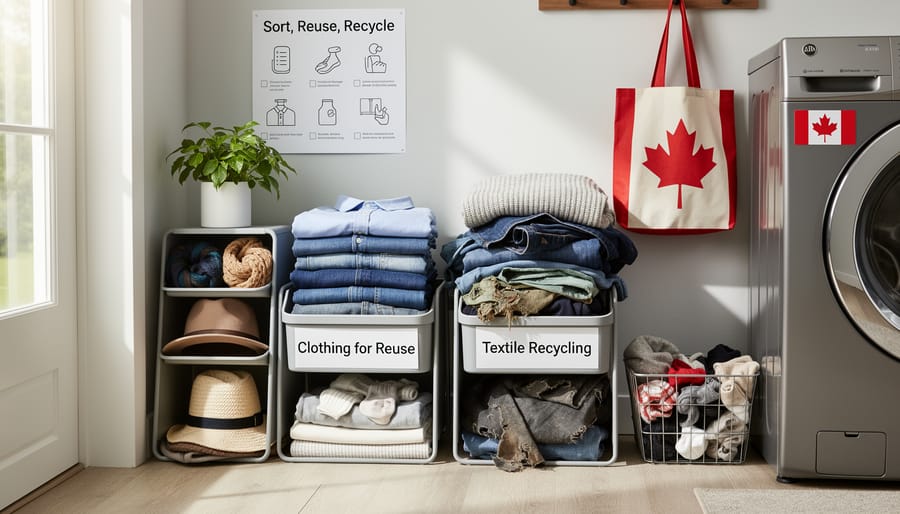
Recycling clothing successfully requires minimal equipment, but having the right setup makes the process smoother and ensures your textiles reach the appropriate recycling streams. Most items you need are already in your home, and the preparation takes less time than sorting regular household recycling.
Start by gathering these essential items:
- Three separate bins or bags for sorting wearable donations, recyclable textiles, and items that cannot be recycled
- Clear plastic bags or reusable totes for transporting sorted clothing to drop-off locations
- Scissors or seam rippers for removing non-textile components like metal buttons or plastic zippers
- Basic cleaning supplies including detergent and stain remover for pre-recycling preparation
- A notebook or smartphone to track which items go where and record drop-off locations
Understanding what qualifies as recyclable is crucial. Clean, dry textiles in any condition, even worn, torn, or stained, can typically enter recycling streams, though heavily soiled items contaminated with paint, oil, or mould should be excluded for hygiene reasons. Natural fibres like cotton, wool, and linen are highly recyclable, while synthetic blends may have more limited options depending on your local program’s capabilities.
Items should be free of excessive dirt and moisture before recycling. You don’t need to wash gently worn clothing destined for recycling rather than donation, but anything visibly dirty or damp can compromise entire batches at processing facilities. Shoes, bags, and accessories often have separate collection requirements, so keep them in a different category during your initial sort. The key is creating a simple system that helps you identify where each item belongs before you leave your home.
Important Considerations Before You Start
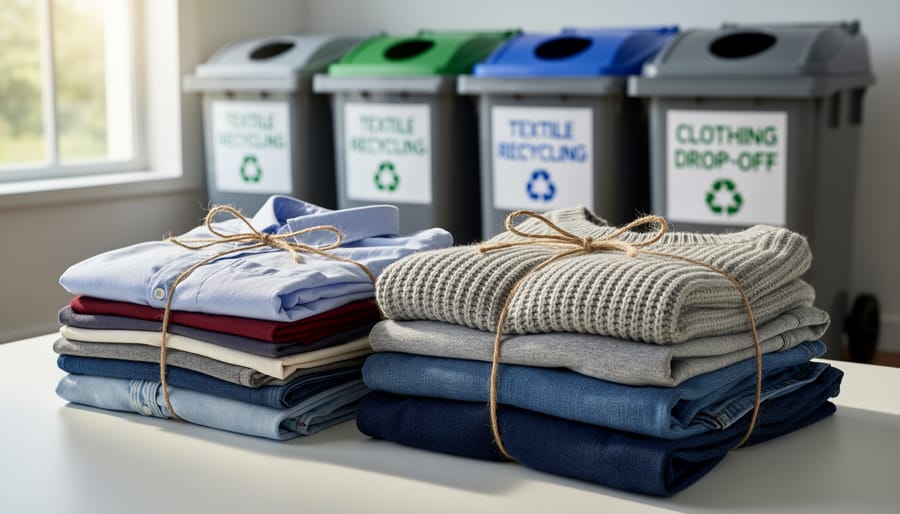
Before you drop off your textiles, take a moment to check for items that could contaminate recycling streams or pose safety risks. Textiles soiled with oil, paint, chemicals, or bodily fluids cannot be recycled and should go in your regular trash, these contaminants can ruin entire bales of recyclable fabric. Remove sharp objects like broken zippers, exposed underwire from bras, and safety pins before recycling, as they can injure workers at sorting facilities.
Items with heavy staining, significant damage, or excessive wear present a grey area. While minor stains don’t disqualify clothes from recycling, heavily soiled garments belong in the trash. For items that are torn or worn but still clean, many m recycle programs accept them because the fabric can be broken down into fibers or repurposed as industrial rags. When in doubt, check your local program’s guidelines, some accept textiles in any condition as long as they’re dry and clean, while others have stricter quality standards. Wet or damp clothing encourages bacterial growth, so ensure everything is completely dry before bagging it for recycling.
Step-by-Step: How to Recycle Your Clothing
Step 1: Sort Your Textiles by Category
Create three distinct piles as you sort through your clothing: wearable donations, recyclable textiles, and items that can’t be recycled.
Wearable donations include any garments in good condition that someone else could wear. These items should be clean, functional, and free from major damage. They’ll go to thrift stores, charity organizations, or community clothing banks where they can be reused directly. This is the most environmentally beneficial option because it extends the garment’s life without requiring industrial processing.
Recyclable textiles are items too worn or damaged for donation but still made from recoverable fibers. This category includes clothing with stains, small tears, missing buttons, or faded fabric. Natural fibers like cotton, wool, and linen are highly recyclable, as are many synthetics like polyester. These will be processed into new materials, insulation, or industrial rags.
Non-recyclable items typically include heavily soiled textiles, those contaminated with hazardous materials, or pieces combining multiple materials that can’t be separated. Underwear and socks are often non-recyclable due to hygiene concerns, though some specialized programs accept them.
When you’re unsure about an item’s category, remember this rule: if you wouldn’t give it to a friend, it belongs in the recyclable pile rather than donations.
Step 2: Prepare Items for Recycling
Before recycling your sorted textiles, proper preparation ensures they’ll be accepted and processed efficiently. Start by washing items that are dirty or stained, most programs require clean clothing to prevent contamination during processing. Check each program’s specific guidelines, as some facilities accept lightly worn items while others need freshly laundered textiles.
Remove non-fabric components that can’t be recycled: metal buttons, decorative pins, oversized zippers, and belts. Small sewn-in features like basic buttons typically don’t need removal, but detachable accessories should come off. Empty all pockets completely, forgotten items can damage recycling equipment.
Let washed items dry thoroughly. Damp textiles can develop mold during collection and transportation, making entire batches unusable. Fold or roll clothing loosely rather than cramming items tightly together. This prevents permanent wrinkles and makes sorting easier at recycling facilities.
For packaging, use clear plastic bags or paper bags depending on your program’s requirements. Tie bags securely but not so tightly that workers can’t open them easily. Label bags if mixing different textile categories, though keeping them separate is often better. Shoes should be tied together in pairs, and accessories like scarves or belts can be bundled with rubber bands.
Step 3: Find Your Local Recycling Option
Finding the right place to recycle your textiles starts with exploring what’s available in your community. Begin by checking your municipality’s waste management website, many Canadian cities now offer curbside textile collection or operate dedicated drop-off depots for clothing and household fabrics. Search “[your city name] textile recycling” to locate official municipal programs.
For retail options, major chains like H&M, Zara, and The North Face run take-back programs where you can drop off any brand of clothing at their stores, often receiving a discount voucher in return. Visit store websites or call ahead to confirm participation and hours, as not all locations accept textiles year-round.
Nonprofit organizations provide another accessible route. Value Village, Diabetes Canada, and local Salvation Army branches accept textiles for reuse and recycling. Search “clothing donation near me” or use online directories to find recycling programs operating in your area.
Before making a trip, verify each program’s specific requirements: some accept only wearable items, while others take damaged textiles. Check if they require items to be bagged, bundled, or loose, and confirm their accepted materials list to avoid wasted effort.
Step 4: Drop Off or Arrange Pickup
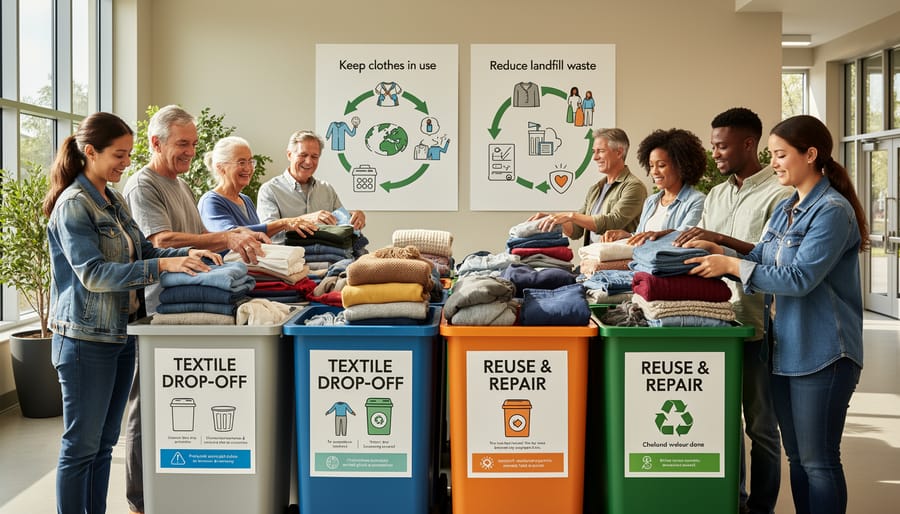
Once you’ve found your preferred recycling option, it’s time to complete the process. For drop-off locations, bring your prepared textiles during operating hours, most accept donations during business hours, though some outdoor bins are accessible 24/7. You’ll typically find clearly marked containers for textiles, separate from general recycling. Simply place your bags or bundles in the designated bin. Staff at attended locations can answer questions if you’re unsure about specific items.
Many municipal programs now offer curbside textile pickup as part of expanded waste collection services. Check your city’s waste collection calendar for scheduled pickup dates. Set out your textiles in clear bags (requirements vary by municipality) on collection day, following local guidelines for placement and timing.
For retail take-back programs, bring items to the customer service desk or designated collection area. Some retailers offer incentives like discount coupons for your next purchase when you drop off textiles.
Expect minimal wait time at most locations. The process takes just minutes, and you’ll leave knowing your clothing is entering the recycling stream rather than heading to landfill.
Verifying Your Impact and Next Steps
After dropping off your textiles, you might wonder what actually happens next. Most municipal programs and retailers don’t offer individual tracking, but you can verify your contribution through program transparency reports. Check the recycling organization’s website for annual impact statements that detail tonnage diverted from landfills and materials recovered.
Some advanced programs provide receipt systems. Vancouver’s Recycling Council of BC partners issue drop-off confirmation slips showing weight or item count. Toronto’s Circular Innovation Council publishes quarterly updates on textile processing volumes. These reports demonstrate collective impact even without personal tracking.
Your recycled clothing follows distinct pathways. Wearable items typically reach second-hand markets through partner charities, extending garment life by an average of two to three years. Damaged textiles enter mechanical recycling, where they’re shredded into fibers for insulation, industrial wiping cloths, or carpet padding. Higher-quality materials may undergo chemical recycling, breaking fibers down to create new textiles without virgin resources.
This process directly supports Canada’s circular economy goals. The National Zero Waste Council estimates textile recycling prevents 85,000 tonnes of CO2 emissions annually by avoiding landfill decomposition and reducing demand for resource-intensive new fabric production. Every kilogram you recycle saves approximately 20 kilograms of CO2 compared to disposal.
Want deeper engagement? Many programs welcome volunteers for sorting days or educational workshops. Subscribe to your local program’s newsletter to receive impact updates and learn when they expand accepted materials or add convenient drop-off locations.
Alternative Recycling Options Across Canada
If drop-off bins don’t suit your schedule or location, Canada offers several alternatives that fit different lifestyles and accessibility needs.
Mail-in programs let you ship unwanted textiles directly to recycling facilities. Some services provide prepaid shipping labels, making it as simple as packing a box and dropping it at the post office, ideal for rural communities far from municipal collection points.
Retailer take-back initiatives are expanding nationwide. Major clothing brands like H&M, Levi’s, and The North Face accept old garments (any brand) at their stores in exchange for discount vouchers. These programs channel textiles into verified recycling streams while rewarding participants.
Consider these additional options to reduce textile waste:
- Community clothing swaps where you trade unwanted items with neighbors
- Upcycling workshops that teach creative ways to transform old clothes into new products
- Repair cafés offering free mending services to extend garment lifespans
- Online platforms like Bunz or Poshmark for peer-to-peer clothing exchange
- Textile collection events hosted by schools and community centers during Earth Week
Several provinces have pioneered innovative approaches. Ontario’s extended producer responsibility programs require fashion brands to fund textile recycling infrastructure. British Columbia encourages businesses to adopt circular models similar to the K-Cycle program which demonstrates how targeted recycling initiatives can address specific waste streams effectively. Quebec’s RECYC-QUÉBEC has launched pilot projects connecting apartment buildings with textile collectors, eliminating transportation barriers for urban residents.
Choose the method that removes the most friction from your routine, the easier it is, the more likely you’ll maintain the habit.
Common Questions About Clothing Recycling
Do my clothes need to be clean before recycling?
Yes, textiles should be clean and dry before recycling. Most programs can’t accept heavily soiled or wet items because they contaminate other materials and create processing challenges at sorting facilities.
What actually happens to my recycled clothing?
Wearable items typically get resold through secondhand markets, while damaged textiles are sorted by fiber type. Natural fibers may become insulation or industrial rags, and synthetic materials can be broken down into new fibers or converted into products like carpet padding.
Can I recycle shoes and accessories through clothing programs?
Many m recycle programs accept shoes, belts, and bags alongside clothing, though some have separate streams for footwear. Check your local program’s guidelines, as leather goods and heavily worn shoes may have different requirements than standard textiles.
Are textile recycling programs the same across all provinces?
No, programs vary significantly by province and municipality. British Columbia has province-wide requirements for textile diversion, while Ontario relies more on voluntary retailer programs and municipal depots. Always verify what your specific region accepts.
Understanding the specifics of your local program helps you participate effectively and avoid misinformation about what can truly be recycled. If you’re unsure whether an item qualifies, contact your recycling facility directly rather than contaminating a load with unsuitable materials. Program websites typically list accepted items clearly, and staff at drop-off locations can answer questions about borderline cases like worn-out athletic wear or clothing with mixed materials. When in doubt, choosing donation over recycling ensures wearable items get used rather than processed unnecessarily.
Every piece of clothing you redirect from the landfill makes a tangible difference. Canada sends over 500,000 tonnes of textiles to landfills each year, where they decompose and release methane, a greenhouse gas 28 times more potent than carbon dioxide. By participating in m recycle programs and other textile recovery initiatives, you directly reduce this burden while conserving the enormous water, energy, and raw materials required to produce new garments.
The transformation starts with your next closet cleanout. Whether you choose municipal collection, retail drop-offs, or community programs, accessible options exist in every province. Your participation demonstrates demand for circular economy solutions and encourages expansion of recycling infrastructure across Canada.
Climate action doesn’t require perfection. Start with one bag of unused clothing. Use the steps you’ve learned to sort, prepare, and deliver textiles to your nearest recycling point. Share what you’ve learned with friends, family, and coworkers. Each conversation multiplies impact.
You’ve taken the time to understand how clothing recycling works. Now take the next step. Check your local m recycle program today, gather those forgotten garments, and turn intention into measurable environmental progress. Your actions create the demand that drives systemic change in how Canada handles textile waste.