
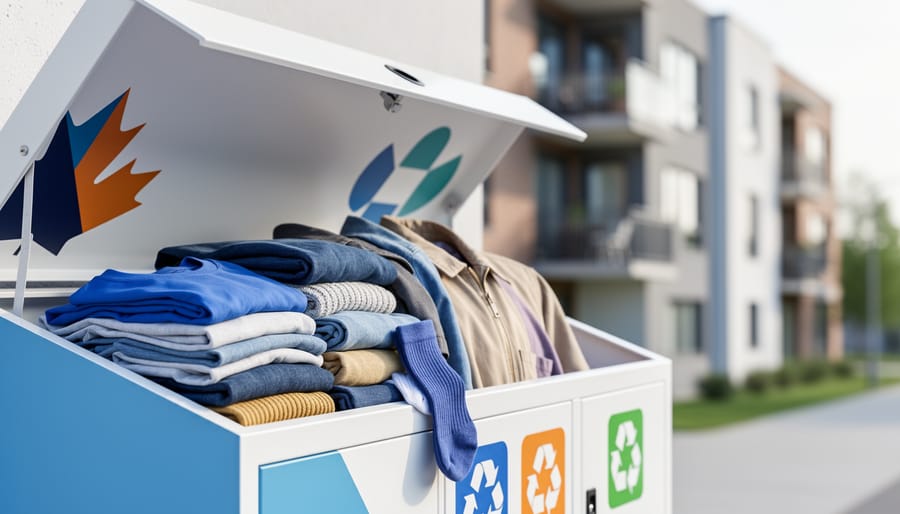
Clothing recycling programs turn unwanted textiles into new materials or products, diverting millions of pounds of fabric from landfills each year. Unlike donation centers that accept only wearable items, these programs take damaged, stained, or worn-out clothing that would otherwise be thrown away, processing them through mechanical shredding or chemical breakdown to create insulation, industrial rags, or even new fibers.
The need has never been more urgent. The average North American discards approximately 81 pounds of textiles annually, and less than 15% currently gets recycled. Most donated clothing doesn’t actually get worn again. It ends up landfilled or incinerated, releasing methane and other greenhouse gases as synthetic fibers take decades to decompose. Textile production also consumes massive amounts of water and energy, making recycling an essential step toward reducing fashion’s environmental footprint.
Finding the right program takes minimal effort but creates measurable impact. Major retailers across Canada now offer take-back bins accepting everything from threadbare t-shirts to single socks. Municipal programs continue expanding their textile collection services. Specialized organizations process specific materials like shoes, underwear, and technical fabrics that standard donation centers reject.
This guide walks you through identifying accessible programs in your community, understanding what items qualify for recycling versus donation, preparing textiles for drop-off, and tracking how your participation contributes to a circular textile economy. You’ll discover that recycling clothing is simpler than you thought and far more powerful than letting usable materials go to waste.
Why Traditional Donation Isn’t Enough Anymore
Most of us have dropped off bags at a donation bin feeling good about giving our unwanted clothes a second life. But here’s what actually happens: only about 10-20% of donated clothing gets resold in thrift stores. The rest? It follows a path that might surprise you.
The sheer volume of donations overwhelms charitable organizations. Thrift stores receive far more items than they can process or sell, particularly fast fashion pieces that are already worn out or outdated. Staff spend hours sorting through donations, and items that don’t meet quality standards for resale get bundled and sold in bulk to textile recyclers or shipped overseas to developing countries.
When clothing gets shipped overseas, it often floods local markets in countries like Kenya or Ghana, undercutting domestic textile industries and creating new waste problems in communities that lack infrastructure to handle it. And much of what arrives is already too poor in quality to wear, ending up in massive textile waste dumps.
Traditional donation also wasn’t designed for today’s textile landscape. Modern clothing often contains synthetic fibers and blends that break down quickly. Items that are stained, torn, or simply too worn for anyone to wear have nowhere to go through standard donation channels.
This gap is exactly what specialized textile recycling programs address. They accept items in any condition and route them to facilities that can actually process the materials, whether through fiber recovery, downcycling into industrial materials, or emerging technologies that regenerate fibers. Recycling isn’t meant to replace donation for wearable clothes, but it handles everything donation can’t.
How Clothing Recycling Programs Work Differently
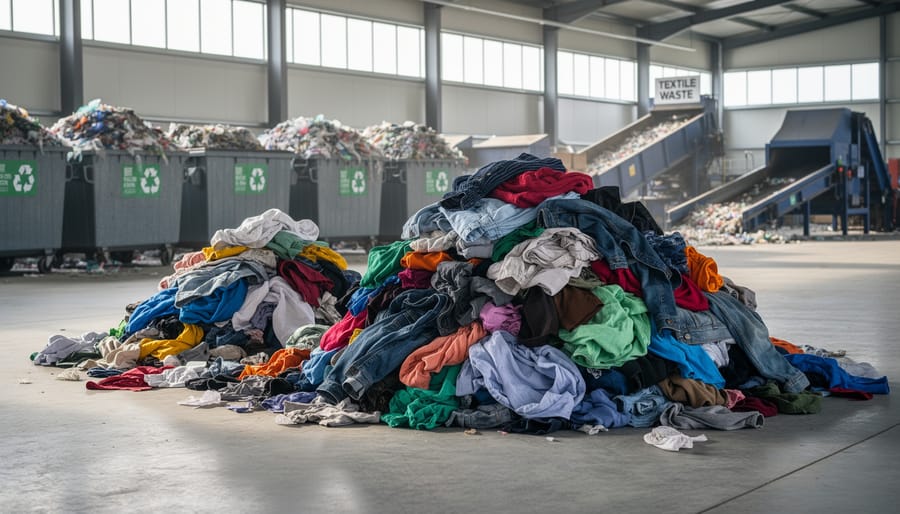
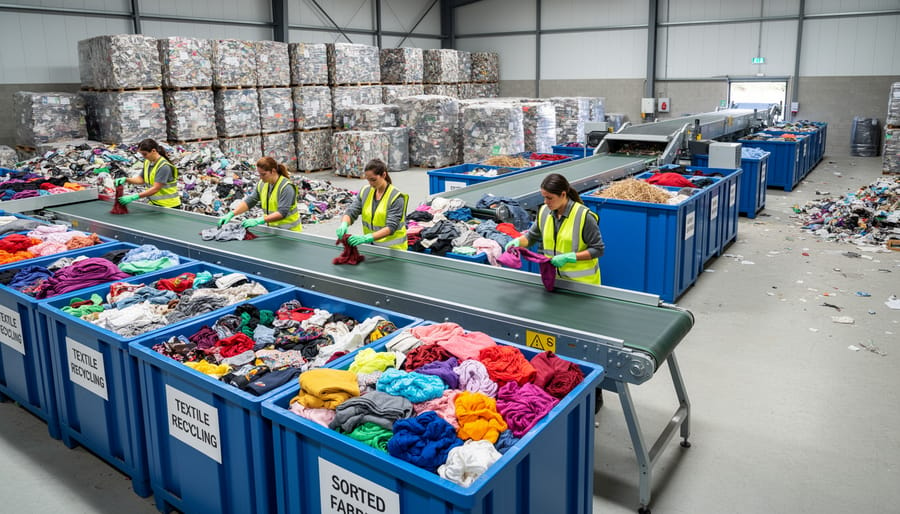
Clothing recycling programs operate on a fundamentally different model than traditional donation centers. When you drop off textiles at a specialized recycling program, your items enter a sorting facility where trained workers assess each piece based on condition, fabric type, and potential for reuse. This initial sorting determines whether a garment gets a second life as clothing, transforms into something entirely different, or breaks down to its raw fibers.
The best-case scenario is resale. Items in good condition, clean, intact, and stylish enough for someone to wear, get routed to thrift stores or exported to second-hand markets. Roughly 20-30% of collected textiles follow this path. These pieces weren’t necessarily too worn for donation; they simply exceeded what local charities could process or sell.
Next comes downcycling, where textiles become industrial materials. Your old t-shirts might get shredded into wiping rags for auto shops and manufacturing facilities. Cotton sweaters could become stuffing for furniture or insulation for buildings. Denim often transforms into housing insulation that’s both effective and keeps thousands of pounds of fabric from landfills. About 30-40% of collected textiles end up downcycled, extending their usefulness even when they’re too damaged to wear.
The most advanced option is fiber-to-fiber recycling, though it currently handles only 10-15% of collected textiles due to technical complexity and cost. This process breaks garments down to their basic fibers, either mechanically shredding them or chemically dissolving them, then spins those fibers into new yarn for fresh fabrics. A cotton shirt can literally become another cotton shirt. Some programs even handle polyester this way, depolymerizing plastic-based fabrics back to their chemical building blocks.
The remaining textiles that can’t be recycled, reused, or downcycled, typically 15-20%, still go to landfills, but that’s far less than the 85% of all textiles that currently get trashed when people don’t use recycling programs.
Major Clothing Recycling Programs Available Across Canada
Retailer Take-Back Programs
Several major retailers in Canada operate convenient in-store textile collection programs, making recycling as simple as your next shopping trip. H&M accepts any clothing or textiles from any brand in any condition at all Canadian locations, offering a discount voucher toward your next purchase for each bag you bring in. Their collected textiles get sorted into categories for rewear, reuse (such as cleaning cloths), or recycling into textile fibers.
Patagonia’s Worn Wear program takes back used Patagonia gear at their stores and through mail-in options. They repair and resell items when possible, with irreparable pieces recycled through their textile recovery partners. While you won’t receive a direct incentive, you’re supporting a closed-loop system that extends product life and reduces manufacturing demand.
The North Face operates a similar Clothes the Loop program across Canada, accepting any brand’s clothing and footwear regardless of condition. They partner with organizations that sort items for reuse or material recovery, and participants receive a discount on future purchases.
Canadian retailers like MEC and Lululemon also run take-back initiatives, with MEC accepting outdoor gear for their Upcycle program and Lululemon collecting athletic apparel through Like New. These programs transform worn items into new products or materials rather than letting wearable fabrics reach landfills.
Municipal and Community Programs
Many Canadian cities now offer curbside or depot-based textile collection alongside regular recycling programs, making it easier than ever to keep clothing out of landfills without driving across town. Vancouver, Toronto, Calgary, and Montreal have all expanded their waste management systems to include textiles, though specific collection methods vary by municipality.
Check your city’s waste management website for details, some cities provide designated textile bins at recycling depots, while others include textiles in multi-stream collection programs. Toronto’s Textile Collection Pilot, for example, accepts clean clothing, linens, and accessories at select community environment days throughout the year.
Community-based programs fill gaps where municipal services haven’t yet expanded. Local organizations often partner with schools, community centers, and faith communities to host regular textile collection drives. These grassroots initiatives typically work with regional recycling facilities or social enterprises to ensure collected items are properly sorted and processed rather than exported overseas.
Libraries, recreation centers, and community boards frequently post information about upcoming collection events. Some neighborhoods have established permanent drop-off locations at community gardens or zero-waste hubs. These local programs often accept items in any condition, including torn or stained textiles that retailers won’t take, since they’re specifically partnering with facilities equipped for downcycling and fiber recovery.
Specialized Textile Recovery Organizations
Several organizations operate specifically to recover and recycle textiles that might otherwise be trashed. For Days runs a membership-based “closed loop” system where you send back worn-out items and receive credits toward new basics made from recycled fibers. Their Take Back Bag program accepts any brand’s clothing, making participation straightforward even if you haven’t purchased from them.
Trashie offers a mail-in service through their Take Back Bags, which you can order online. Fill the bag with textiles from any brand, ship it back for free, and receive rewards to spend at partner retailers. They handle items in any condition, including stained or torn pieces that donation centers reject.
In Canada, Value Village’s partnership with various local charities supports textile diversion through their retail model, while newer players like Aritzia’s Community Initiatives program focus on extending garment life through their own collection networks. The Textile Recycling Network connects smaller Canadian processors who specialize in industrial textile recovery, working with manufacturers and municipalities to keep commercial fabric waste out of landfills.
These specialized organizations complement broader clothing recycling programs by targeting specific gaps, damaged textiles, brand-specific circularity, or commercial waste, that general collection programs often miss. Their focused approach often means higher actual recycling rates compared to mixed collection systems.
What You Can (and Can’t) Recycle Through These Programs
Understanding what textiles can actually be recycled prevents well-meaning items from contaminating recycling streams and helps programs operate efficiently.
Most clothing recycling programs accept worn-out items you’d never consider donating. That t-shirt with holes, jeans with broken zippers, mismatched socks, they’re all candidates for textile recycling. Unlike donation centers that need resellable items, recycling programs welcome stained, torn, or threadbare clothing because these pieces get broken down into fibers or repurposed as industrial rags.
Programs typically accept cotton, polyester, wool, and blended fabrics in any condition. Many also take linens, towels, sheets, and curtains. Shoes present a mixed picture: some programs accept athletic shoes and boots, while others don’t have the processing capacity for footwear.
What usually can’t go in textile recycling bins? Items contaminated with hazardous materials like paint or motor oil, heavily mildewed fabrics, and materials mixed with non-textile components that can’t be separated. Wet clothing should be dried first to prevent mold from ruining entire collection batches.
Accessories depend on the program, some accept belts, purses, and hats, others prefer items that are primarily fabric. Check your specific program’s guidelines before dropping items off.
When in doubt, the general rule is simple: if it’s made primarily from fabric, it can probably be recycled even if it’s unwearable. Programs would rather process your ratty old sweater than have it take up landfill space for decades.
Success Stories: Canadians Making a Difference
When Emily Rodriguez launched a clothing recycling drive at her Toronto high school in spring 2025, she expected maybe a dozen bags. By the end of the two-week collection period, students and staff had contributed 347 kilograms of textiles through a partnership with a local recycling program. The initiative sparked a school-wide conversation about fast fashion and inspired three neighboring schools to launch their own drives. Emily tracked the impact: those textiles avoided landfill decomposition that would have released approximately 580 kilograms of CO2 equivalent into the atmosphere.
In Vancouver’s Mount Pleasant neighborhood, residents Sarah Chen and Marcus Thompson transformed frustration with overflowing donation bins into action. They organized monthly textile collection events in partnership with a municipal recycling program, setting up a clearly marked drop-off station at the community center. Over eighteen months, their volunteer-run program has diverted more than 2,200 kilograms of textiles from garbage bins. What started as six neighbors grew to a network of forty regular participants who now coordinate drop-offs and share repair skills at quarterly clothing swap events held alongside the collections.
The Winnipeg Public Library system launched a textile recycling education program that pairs drop-off bins at fifteen branch locations with workshops teaching residents about fabric lifecycles. Since the program began in fall 2024, library staff report collecting an average of 180 kilograms monthly across all locations. The workshops consistently fill to capacity, with attendees ranging from university students to retirees, all learning how their participation in clothing recycling programs extends the life of textiles and reduces waste heading to Prairie landfills.
How to Start Recycling Your Clothing Today
Starting your clothing recycling journey is simpler than you think. You don’t need to overhaul your entire wardrobe or spend hours researching, a few straightforward actions can make an immediate difference.
- Sort through one closet or drawer this week and pull out items you haven’t worn in the past year, including pieces that are damaged or stained.
- Check if major retailers near you, like H&M, The North Face, or Patagonia, accept textiles in-store, or search “[your city] textile recycling” to find municipal drop-off locations.
- Prepare items by placing them in a bag or box, keeping pairs of shoes tied together and ensuring pockets are empty (no need to wash worn-out pieces destined for recycling).
- Drop off your textiles during your next shopping trip or errand run, making it part of your routine rather than a special task.
- Set a recurring reminder every three months to repeat the process, turning clothing recycling into a habit rather than a one-time effort.
The key is starting small. Many Canadians delay because they feel overwhelmed by the volume of unwanted clothing they’ve accumulated. Instead of tackling everything at once, focus on one category, winter coats you’ve outgrown, mismatched socks, or that pile of jeans that no longer fit. You’ll build momentum as you see how easy the process actually is.
Keep a designated bag or bin in your closet labeled “for recycling.” When you notice a shirt with a permanent stain or shoes with worn-through soles, toss them in immediately rather than letting them take up space. Once the bag is full, you’re already ready for drop-off.
Beyond Recycling: Building a Circular Wardrobe
Recycling programs offer an important safety net for textiles that have reached the end of their useful life, but the most effective way to reduce clothing waste is to need recycling less often in the first place. Building a circular wardrobe means thinking differently about how you acquire, use, and eventually part with clothing.
Start by questioning each purchase. Before buying something new, consider whether you’ll wear it at least thirty times, a simple test that cuts through impulse buying. When you do shop, prioritize quality materials and construction that will last years rather than seasons. Natural fibers like organic cotton, linen, and wool typically outlast synthetic fast-fashion alternatives and break down more easily when they eventually do reach recycling programs.
Learn basic repair skills or find a local tailor. Replacing a button, mending a seam, or patching worn knees extends a garment’s life significantly. Many community centers and libraries now offer repair workshops, turning maintenance into a social activity rather than a chore.
Support brands designing for circularity from the start, companies that offer repair services, take-back programs, or use recycled materials in production. When you’re ready to part with items still in wearable condition, explore clothing swaps with friends or local swap events before defaulting to recycling.
This approach doesn’t mean never using clothing recycling programs. It means those programs handle only what truly can’t be worn, repaired, or passed along, making your participation in them more meaningful and less frequent.
Every piece of clothing you divert from the landfill through recycling programs represents a small victory in the fight against climate change. While individual textile items might seem insignificant, collectively Canadian households discard hundreds of thousands of tonnes of clothing annually. When you choose recycling over throwing textiles in the trash, you’re actively reducing methane emissions from landfills, conserving water and energy that would go into producing new fabrics, and supporting the development of circular economy infrastructure that benefits everyone.
The clothing recycling programs we’ve explored aren’t perfect, but they’re working solutions available to you right now. You don’t need to wait for systemic change to make a difference. Start with one bag of unwanted textiles. Find your nearest program. Make it a routine. Then share what you’ve learned with friends, family, and your community. Post about your experience. Show others how easy participation can be.
Your actions create ripples. When you recycle clothing consistently, you normalize the practice for those around you. You demonstrate that environmental responsibility doesn’t require perfection, just commitment to making better choices when options exist. The programs are ready. The infrastructure is growing. What happens next depends on Canadians like you choosing to participate.